


Add this initiative to my favorites
Remove this initiative to my favorites






 |
| Leader name |
| Carnivore for Coexistence Alliance |
 |
| Entity type |
| Non-governmental organization |
 |
| Launching Date |
| 1 April 2019 |
 |
| Assessment initiative |
| Not assessed |
 |
| Initiative Type |
| Fixed fences |
 |
| Wildlife species |
| Omnivores and frugivores |
| Puma |
| Wolf |
| - black bear (Ursus americanus) |
| - cougar (Puma concolor) |
| - wolf (Canis lupus) |
 |
| Issues |
| Livestock |
 |
| Intervention area |
| Canada |
| Metchosin, VAncouver Island, British Columbia, Canada |
Over the past 5 years, 54 bears and 30 cougars have been killed in the Capital Regional District (CRD), Victoria, Canada, due to conflict; of these, 14 bears and 22 cougars were destroyed due to agricultural conflicts. Of those 2 bears and 6 cougars were killed in Metchosin since 2011. In Metchosin the number of calls to conservation officer with regards to conflicts with carnivores has boomed since 2016 (from 9 to 23 calls regarding damages, injuries, garbage accessing, and livestock killings for both black bears and cougars), especially in regard to black bears predating livestock (from an average of 2.29 in the previous six years to 7 calls this year since April). To move from human-carnivores conflicts to coexistence the Carnivore for Coexistence Alliance has engaged in helping install electric fencing in areas where bear-livestock conflicts are high.
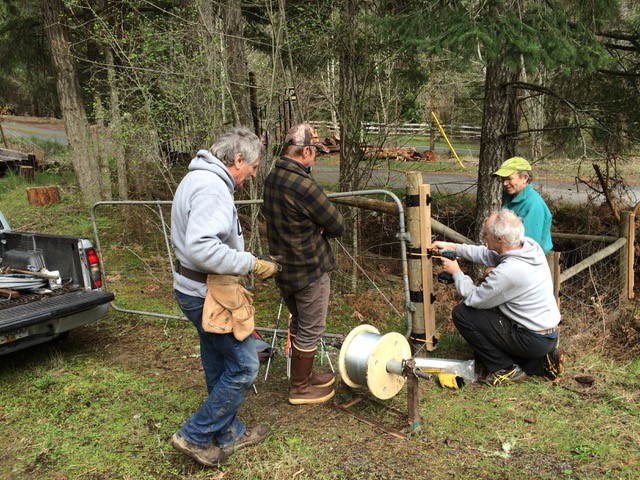
In April 2019, the Carnivore for Coexistence Alliance and Jeff Marley have helped install an electric fence on a property in Metchosin, Victoria, BC, that has experienced sheep losses over the last few years. To better understand what happens when we install an electric fence, we have set up cameras to document bear behaviour in response to electric fencing. So far no livestock has been predate by bears thanks to the electric fencing.
Reduce the killing of carnivores due to livestock depredation and increase farmers willingness to coexist with carnivores on a shared landscape.
Maintain the electric fencing in operation, cut back all the vegetation around the fencing to allow the fencing to be working perfectly, check on battery regularly,
IMPLEMENTATION
 |
| Workforce |
| - |
 |
| Workload |
| - |
 |
| Training |
| - |
 |
| Training duration |
| - |
 |
| Financial cost |
| - |
 |
| Currency financial cost |
| - |
-
USE & MAINTENANCE
|
| Workforce |
| - |
|
| Workload |
| - |
|
| Training |
| - |
|
| Training duration |
| - |
|
| Financial cost |
| - |
|
| Currency financial cost |
| - |
 |
| Annual period of use |
| - |
 |
| Daily period of use |
| - |
-
 |
Contact | coexcarnivores@gmail.com | |
 |
Internet links |
|
|
 |
Funding opportunities | The Coexistence with Carnivores Allaince was funded in part by Agriculture and Agri-Food Canada and the Government of British Columbia through the Agri-Food Futures Fund. This program is delivered by the Investment Agriculture Foundation of B.C |
 |
Documentations | |
| - |
This initiative does not have a video yet
Addressing Human – Wildlife interaction issues often requires a combination of diverse initiatives. While many of these already exist, they are spread out across the globe in such a way that many remain unknown and not available to all.
The ENCOSH platform has been co-created by an international, interdisciplinary team to foster and help practitioners worldwide to share their knowledge and experiences
Please do not hesitate to contact us for further information and guidance or share any suggestions to make this new platform the most suitable to your needs and expectations: https://encosh.org/contact/
Please, take into account that is an automatic translation made by a computer; the translation may not be always very accurate. If this translation is not clear enough in your native language, please let us know here: https://encosh.org/en/contact/. Donations will help paying professional translators for including qualitative translations instead





Be the first to write a comment about this initiative