


Add this initiative to my favorites
Remove this initiative to my favorites

The bee fence is a simple barrier along which are arranged at regular intervals (10 m), hives suspended on a cable. Its operation is based on the observation that elephants would not approach within four meters of a hive (King et al., 2009). Despite the thickness of their skin, t...
Read
Add this initiative to my favorites
Remove this initiative to my favorites

The establishment of buffer cultivation based on chilli or chili fencing made with sisal ropes soaked in motor oil mixed with ground chilli (Capsicum spp.) can scare elephants. The active ingredient in chilli, capsaicin, has the power to irritate the epithelium of mammalian cells...
Read
Add this initiative to my favorites
Remove this initiative to my favorites

Natural physical barriers made up of cacti and sisal have been tested in Mozambique to keep elephants away from agricultural plots, but few scientific publications exist on their effectiveness.
Read
Add this initiative to my favorites
Remove this initiative to my favorites

In parallel with the dissemination of information to villagers on the most appropriate methods of storing food and beverages, we have produced, in two of our projects in Zambia, an educational booklet on the construction of reinforced grain shelters. These shelters mainly store m...
Read
Add this initiative to my favorites
Remove this initiative to my favorites

From my lion work in the past, 90% of cattle killed by lions are killed when grazing without a herder. When I was a child in Zimbabwe, I never saw a herd of cattle alone without a herder. Therefore, something has changed.
When we ask what has changed, the answer is that t...
Add this initiative to my favorites
Remove this initiative to my favorites

A low-cost and open source system that helps to early detect and alert people about the presence of large mammals.
Read
Add this initiative to my favorites
Remove this initiative to my favorites

A virtual fence creates a no-go area by manipulating the “Landscape of Fear” of a specific species. The virtual fence is designed to act like a territorial boundary in the mind of a target animal. Territorial boundaries are respected by potential intruders out of fear of retr...
Read
Add this initiative to my favorites
Remove this initiative to my favorites
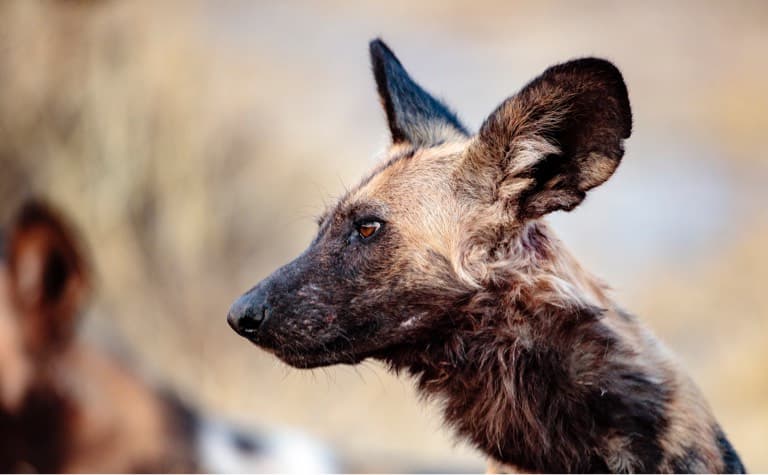
Developing artificial chemical signals that will keep African Wild Dogs safely inside the borders of protected conservation areas.
Read
Add this initiative to my favorites
Remove this initiative to my favorites

Farm to show good farming practices and non-lehal measure to prevent and limit depredation by large carnivores
Read
Add this initiative to my favorites
Remove this initiative to my favorites
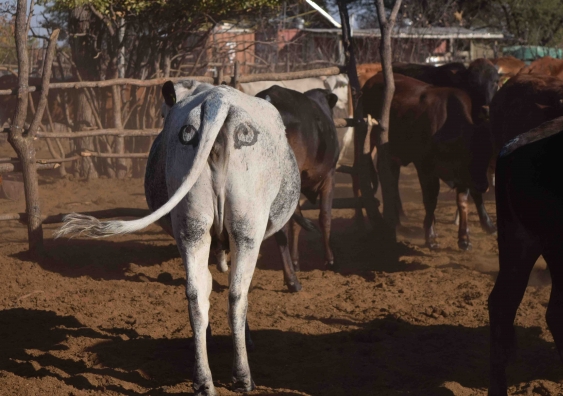
This initiative consists of painting eyes on the hindquarters of cows to scare off predators that ambush them from behind like lions.
Working with Botswana Predator Conservation and local herders, we painted the cattle of 14 herds that had recently suffered lion atta...
Addressing Human – Wildlife interaction issues often requires a combination of diverse initiatives. While many of these already exist, they are spread out across the globe in such a way that many remain unknown and not available to all.
The ENCOSH platform has been co-created by an international, interdisciplinary team to foster and help practitioners worldwide to share their knowledge and experiences
Please do not hesitate to contact us for further information and guidance or share any suggestions to make this new platform the most suitable to your needs and expectations: https://encosh.org/contact/
Please, take into account that is an automatic translation made by a computer; the translation may not be always very accurate. If this translation is not clear enough in your native language, please let us know here: https://encosh.org/en/contact/. Donations will help paying professional translators for including qualitative translations instead