


Add this initiative to my favorites
Remove this initiative to my favorites

To support pastoralists and shepherds and give them the keys to successfully introduce a livestock guarding dog into their herd and its use on a daily basis, a national technical network on dogs has been set up.
Its objective is to disseminate knowledge and know-how in the...
Add this initiative to my favorites
Remove this initiative to my favorites
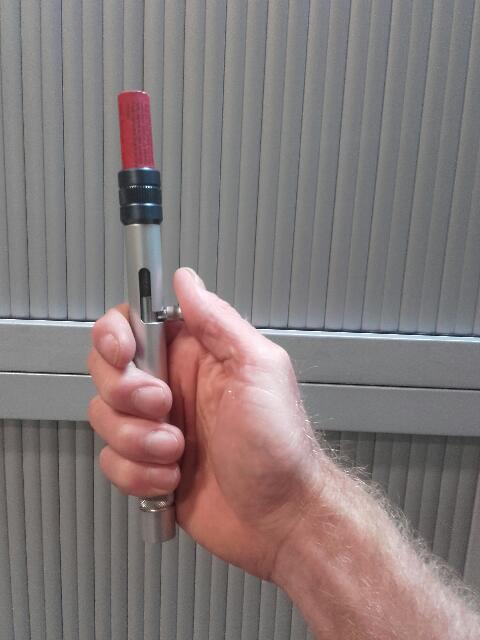
2 firecrackers are available for each pastoral unit. Use over a period of 15 days renewable.
Number of cartridges limited
The firecracker pen has been used at least twice. The tool was used when the shepherd noticed a panic of the herd following the supposed presenc...
Add this initiative to my favorites
Remove this initiative to my favorites

As part of a project to understand "Behavior of wolves facing fences in agriculture", a study was conducted with wolves held in a wildlife park. The results of this project were staged in a film entitled "Anti-wolf fence for small livestock". This film deals with the theme of the...
Read
Add this initiative to my favorites
Remove this initiative to my favorites

The Association VIE carries the applied research project entitled "The Patou does not do all" on the links that exist between social and spatial behaviors of livestock guarding dogs. The purpose of this participatory study is, among other things, to highlight elements that may he...
Read
Add this initiative to my favorites
Remove this initiative to my favorites

Support program for pastoralism areas of action of FERUS, a conservation association for large predators in France.
Read
Add this initiative to my favorites
Remove this initiative to my favorites

To facilitate the long-term sustainability of this measure, Greek eNGOs initiated an extensive consultation and negotiation processes with national competent authorities, mainly the Ministry of Rural Development and Food so that financial support for the measure would be included...
Read
Add this initiative to my favorites
Remove this initiative to my favorites
Both the Marsican brown bear (Ursus arctos marsicanus) and the Italian honey bee (Apis mellifera ligustica) are threatened by the alteration of ecosystems caused by humans. If the bear is critically endangered and on the verge of extinction, then the bees are not safe either. The...
Read
Add this initiative to my favorites
Remove this initiative to my favorites

Improved systems of food/waste management in areas that have recently experienced problems with human habituated and food-conditioned bears as well as showing what other practical measures can be taken to discourage bears from visiting hotels, camp sites and cottage.
Read
Add this initiative to my favorites
Remove this initiative to my favorites

Since the bears have started to migrate to Switzerland sporadically, hives have been regularly attacked. A fact sheet explains how to protect bees from attack by a bear.
Read
Add this initiative to my favorites
Remove this initiative to my favorites

The Livestock Guarding Dog Program (LGD Program) was initiated in 1996, in the scope of the wolf conservation strategy established by Grupo Lobo, and has been running since. Its main goal is to promote the recovery of autochthonous breeds of livestock guarding dogs as an effectiv...
ReadAddressing Human – Wildlife interaction issues often requires a combination of diverse initiatives. While many of these already exist, they are spread out across the globe in such a way that many remain unknown and not available to all.
The ENCOSH platform has been co-created by an international, interdisciplinary team to foster and help practitioners worldwide to share their knowledge and experiences
Please do not hesitate to contact us for further information and guidance or share any suggestions to make this new platform the most suitable to your needs and expectations: https://encosh.org/contact/
Please, take into account that is an automatic translation made by a computer; the translation may not be always very accurate. If this translation is not clear enough in your native language, please let us know here: https://encosh.org/en/contact/. Donations will help paying professional translators for including qualitative translations instead