


Add this initiative to my favorites
Remove this initiative to my favorites

Working as a shepherd in the Pyrenees is a challenge since bears are around. Yannick Lamazou produces cheese up in the mountains in the National Park and found a good way of promoting bears and sheep at the same time.
Yannick Lamazou is the son of a shepherd who has ...
Add this initiative to my favorites
Remove this initiative to my favorites

Peppi and Marko Laine are sheep farmers from Salo, Finland. Over the past years the sightings of wolves has increased from only a few to almost a hundred. Last year two of their lambs were killed by wolves. Now they are testing if llamas would be suitable guardians for their shee...
Read
Add this initiative to my favorites
Remove this initiative to my favorites

16 years ago Pedro and Ana decided to move to Castro Laboreiro where many of the wolves in Portugal live. They never regretted this move - today they have an ecotourism company and offer visitors a unique experience by riding horses through the ‘land of the wolves’.
Add this initiative to my favorites
Remove this initiative to my favorites

We aim to test two new non-lethal methods to prevent sheep predation by wolves.
One method consists in a lightweight cover made of fabric stripes impregnated with a concentrated chili pepper extract and hanging around the sheep: a "defence harness". The harness should not ...
Add this initiative to my favorites
Remove this initiative to my favorites

A participatory nation-wide think-tank (Campo Grande Group) where people linked to several sectors related to the conflict are participating. The goal is to gather some agreements and negotiated propositions to address conflict and de-escalate the tension generated by this proble...
Read
Add this initiative to my favorites
Remove this initiative to my favorites

Initially developed to protect poultry from foxes, the use of flashing lights was then extended to various predators: in Nepal to limit depredation of snow leopard over livestock, in Africa against cheetah attacks or in France against wolves.
The device emits flashe...
Add this initiative to my favorites
Remove this initiative to my favorites
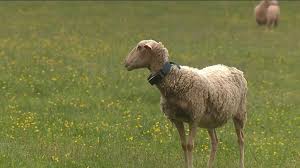
Project initiated in 2011, in the cantons of Vaud and Valais (Switzerland).
It is broken down into two parts:
- The design of the attack detection system;
- The composition of the repellent; alarm pheromones, the choice of the discriminating stimulus.
Add this initiative to my favorites
Remove this initiative to my favorites

This cartographic tool makes it possible to signal the presence of a predator to all those responsible for herds located in the vicinity.
Operation:
- The observer places a presence index on the map;
- He chooses the area to cover to launch the alert;
- Al...
Add this initiative to my favorites
Remove this initiative to my favorites

The ultimate objective of this program is to improve the "quality" of livestock guarding dogs (selection, education, behavior), to identify the parameters and situations that influence their effectiveness in protection (pastoral practices, equipment, use of space …) and thus he...
Read
Add this initiative to my favorites
Remove this initiative to my favorites

The Kangal or Anatolian Shepherd is a breed of dog of Turkish origin. It has been used for thousands of years as a guard dog during the transhumance of cattle. It is a muscular, powerful race, with a large head and a robust body. The male measures between 80 and 100 cm at the wit...
ReadAddressing Human – Wildlife interaction issues often requires a combination of diverse initiatives. While many of these already exist, they are spread out across the globe in such a way that many remain unknown and not available to all.
The ENCOSH platform has been co-created by an international, interdisciplinary team to foster and help practitioners worldwide to share their knowledge and experiences
Please do not hesitate to contact us for further information and guidance or share any suggestions to make this new platform the most suitable to your needs and expectations: https://encosh.org/contact/
Please, take into account that is an automatic translation made by a computer; the translation may not be always very accurate. If this translation is not clear enough in your native language, please let us know here: https://encosh.org/en/contact/. Donations will help paying professional translators for including qualitative translations instead