This user has not added any information to their profile yet.
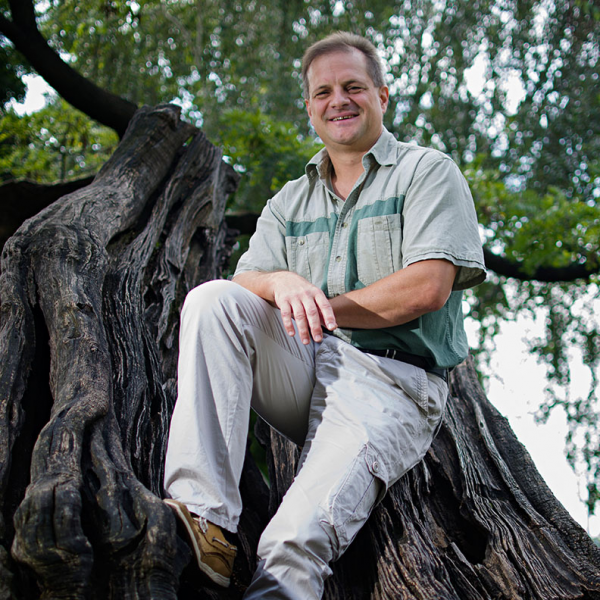
Prof. Brandon Anthony is a Professor in the Environmental Sciences and Policy Department at the CEU. Formerly, he served as advisor to the Hungarian Nature Conservation Institute, and as a park supervisor and agricultural habitat biologist in Canada. In addition to conservation practice, he has conducted research in North America, Africa, and Eurasia on nature conservation, rural livelihoods, human-wildlife conflict, protected area management, and amphibian ecology. He has published widely, supervised 7 PhD and 43 MSc students, and is a member of 3 IUCN Commissions (WCPA, CEESP, and SSC - Amphibian Specialist Group).
ISCB, UCN WCPA, IUCN CEESP, IUCN SSC - amphibians
Anthony, B.P. & Tarr, K. 2019. The wolves are back! Local attitudes towards the recently re-populated grey wolf and wolf management in Bükk National Park, Hungary. Acta Zoologica Academiae Scientiarum Hungaricae 65(2): 195-214
Sukanan, D. & Anthony, B.P. 2019. Community attitudes towards bears, bear bile use and bear conservation in Luang Prabang, Lao PDR. Journal of Ethnobiology and Ethnomedicine 15: 15 pp.
Anthony, B.P., Tatayah, V., & de Chazal, D. 2018. Taking the first steps: Initial mapping of human-wildlife interaction of the Mauritius Fruit Bat Pteropus niger (Mammalia: Chiroptera: Pteropodidae) in Mauritius by conservation organizations. Journal of Threatened Taxa 10(8): 12073-12081.
Sándor, A., & Anthony, B.P. 2018. Mapping the conflict of raptor conservation and recreational shooting in the Batumi Bottleneck, Republic of Georgia. Journal of Threatened Taxa 10(7):11850-11862.
Anthony, B. & Swemmer, L. 2015. Co-defining program success: Identifying objectives and indicators towards adaptively managing a livestock damage compensation scheme at Kruger National Park, South Africa. Journal for Nature Conservation 26: 65-77.
Anthony, B., Scott, P. and Antypas, A. 2010. Sitting on the fence? Policies and practices in managing human-wildlife conflict in Limpopo Province, South Africa. Conservation & Society 8(3):225-240.
Addressing Human – Wildlife interaction issues often requires a combination of diverse initiatives. While many of these already exist, they are spread out across the globe in such a way that many remain unknown and not available to all.
The ENCOSH platform has been co-created by an international, interdisciplinary team to foster and help practitioners worldwide to share their knowledge and experiences
Please do not hesitate to contact us for further information and guidance or share any suggestions to make this new platform the most suitable to your needs and expectations: https://encosh.org/contact/
Please, take into account that is an automatic translation made by a computer; the translation may not be always very accurate. If this translation is not clear enough in your native language, please let us know here: https://encosh.org/en/contact/. Donations will help paying professional translators for including qualitative translations instead