Ce compte n’a pas encore ajouté d’informations à son profil.
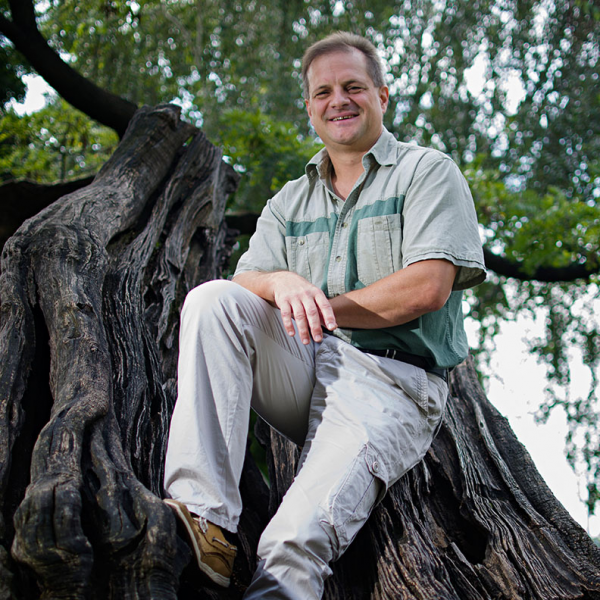
Prof. Brandon Anthony is a Professor in the Environmental Sciences and Policy Department at the CEU. Formerly, he served as advisor to the Hungarian Nature Conservation Institute, and as a park supervisor and agricultural habitat biologist in Canada. In addition to conservation practice, he has conducted research in North America, Africa, and Eurasia on nature conservation, rural livelihoods, human-wildlife conflict, protected area management, and amphibian ecology. He has published widely, supervised 7 PhD and 43 MSc students, and is a member of 3 IUCN Commissions (WCPA, CEESP, and SSC - Amphibian Specialist Group).
ISCB, UCN WCPA, IUCN CEESP, IUCN SSC - amphibians
Anthony, B.P. & Tarr, K. 2019. The wolves are back! Local attitudes towards the recently re-populated grey wolf and wolf management in Bükk National Park, Hungary. Acta Zoologica Academiae Scientiarum Hungaricae 65(2): 195-214
Sukanan, D. & Anthony, B.P. 2019. Community attitudes towards bears, bear bile use and bear conservation in Luang Prabang, Lao PDR. Journal of Ethnobiology and Ethnomedicine 15: 15 pp.
Anthony, B.P., Tatayah, V., & de Chazal, D. 2018. Taking the first steps: Initial mapping of human-wildlife interaction of the Mauritius Fruit Bat Pteropus niger (Mammalia: Chiroptera: Pteropodidae) in Mauritius by conservation organizations. Journal of Threatened Taxa 10(8): 12073-12081.
Sándor, A., & Anthony, B.P. 2018. Mapping the conflict of raptor conservation and recreational shooting in the Batumi Bottleneck, Republic of Georgia. Journal of Threatened Taxa 10(7):11850-11862.
Anthony, B. & Swemmer, L. 2015. Co-defining program success: Identifying objectives and indicators towards adaptively managing a livestock damage compensation scheme at Kruger National Park, South Africa. Journal for Nature Conservation 26: 65-77.
Anthony, B., Scott, P. and Antypas, A. 2010. Sitting on the fence? Policies and practices in managing human-wildlife conflict in Limpopo Province, South Africa. Conservation & Society 8(3):225-240.
La résolution des problèmes d'interaction Homme - Faune sauvage nécessite souvent une combinaison d'initiatives diverses. Bien que nombre d'entre elles existent déjà, elles sont réparties à travers le monde de telle manière que beaucoup restent inconnues et ne sont pas accessibles à tous.
La plateforme ENCOSH a été co-créée par une équipe internationale et interdisciplinaire pour encourager et aider les personnes concernées du monde entier à partager leurs connaissances et leurs expériences.
N'hésitez pas à nous contacter pour plus d'informations et de conseils ou à partager vos suggestions pour faire de cette nouvelle plateforme la plus adaptée à vos besoins et attentes: https://encosh.org/contact/
Please, take into account that is an automatic translation made by a computer; the translation may not be always very accurate. If this translation is not clear enough in your native language, please let us know here: https://encosh.org/contact/. Donations will help paying professional translators for including qualitative translations instead