


Add this initiative to my favorites
Remove this initiative to my favorites

Elephants break water tanks, and pipes, and sometimes houses to access water. The main aim is to protect the water storage facilities in rural villages , as the loss of water in a semi-arid desert puts many human lives at risk.
The government provides each village ...
Add this initiative to my favorites
Remove this initiative to my favorites
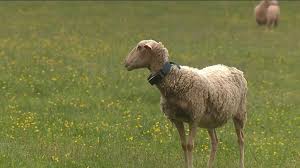
Project initiated in 2011, in the cantons of Vaud and Valais (Switzerland).
It is broken down into two parts:
- The design of the attack detection system;
- The composition of the repellent; alarm pheromones, the choice of the discriminating stimulus.
Add this initiative to my favorites
Remove this initiative to my favorites

This cartographic tool makes it possible to signal the presence of a predator to all those responsible for herds located in the vicinity.
Operation:
- The observer places a presence index on the map;
- He chooses the area to cover to launch the alert;
- Al...
Add this initiative to my favorites
Remove this initiative to my favorites

The ultimate objective of this program is to improve the "quality" of livestock guarding dogs (selection, education, behavior), to identify the parameters and situations that influence their effectiveness in protection (pastoral practices, equipment, use of space …) and thus he...
Read
Add this initiative to my favorites
Remove this initiative to my favorites

The Kangal or Anatolian Shepherd is a breed of dog of Turkish origin. It has been used for thousands of years as a guard dog during the transhumance of cattle. It is a muscular, powerful race, with a large head and a robust body. The male measures between 80 and 100 cm at the wit...
Read
Add this initiative to my favorites
Remove this initiative to my favorites

The Cape Leopard Trust recognises that farmer-predator conflict remains a highly emotive issue – both for those who lose livestock as well as for those of us who are wholly opposed to the destructive and indiscriminate methods of predator control.
In seeking solu...
Add this initiative to my favorites
Remove this initiative to my favorites
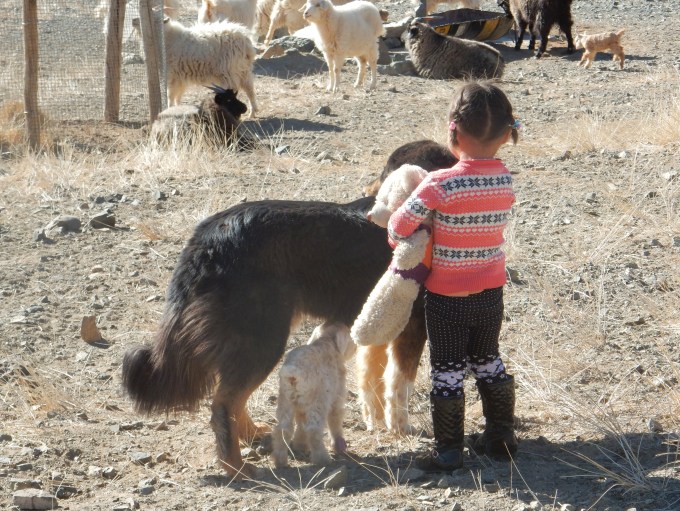
The Mongolian Bankhar Dog Project researches, breeds, and trains Mongolian Bankhar livestock protection dogs and places these working dogs in homes of nomadic herding families on the Mongolian steppe, where the Bankhar perform their traditional role of protecting livestock herds ...
Read
Add this initiative to my favorites
Remove this initiative to my favorites

The Village Tiger Response Team (VTRT) is a community driven mechanism. Their main roles are to manage the Human - Tiger interactions issues inside village and to provide data on a regular basis to manage the WildTeam’s Human-Tiger Conflict (HTC) database. But over the time the...
Read
Add this initiative to my favorites
Remove this initiative to my favorites

Human - Tiger conflict is one of the most critical issues in tiger conservation and also a serious problem for human safety (attacks on humans and livestock. It thus requires a focus on effective mitigation measures. Two of these measures used in Nepal have been assessed: compens...
Read
Add this initiative to my favorites
Remove this initiative to my favorites

In this study, they "use a stated preference approach for measuring tolerance, based on the ‘Wildlife Stakeholder Acceptance Capacity’ concept, to explore villagers’ tolerance levels for tigers in the Bangladesh Sundarbans, an area where, at the time of the research, human-...
ReadAddressing Human – Wildlife interaction issues often requires a combination of diverse initiatives. While many of these already exist, they are spread out across the globe in such a way that many remain unknown and not available to all.
The ENCOSH platform has been co-created by an international, interdisciplinary team to foster and help practitioners worldwide to share their knowledge and experiences
Please do not hesitate to contact us for further information and guidance or share any suggestions to make this new platform the most suitable to your needs and expectations: https://encosh.org/contact/
Please, take into account that is an automatic translation made by a computer; the translation may not be always very accurate. If this translation is not clear enough in your native language, please let us know here: https://encosh.org/en/contact/. Donations will help paying professional translators for including qualitative translations instead