


Add this initiative to my favorites
Remove this initiative to my favorites

Peppi and Marko Laine are sheep farmers from Salo, Finland. Over the past years the sightings of wolves has increased from only a few to almost a hundred. Last year two of their lambs were killed by wolves. Now they are testing if llamas would be suitable guardians for their shee...
Read
Add this initiative to my favorites
Remove this initiative to my favorites

The ultimate objective of this program is to improve the "quality" of livestock guarding dogs (selection, education, behavior), to identify the parameters and situations that influence their effectiveness in protection (pastoral practices, equipment, use of space …) and thus he...
Read
Add this initiative to my favorites
Remove this initiative to my favorites

The Kangal or Anatolian Shepherd is a breed of dog of Turkish origin. It has been used for thousands of years as a guard dog during the transhumance of cattle. It is a muscular, powerful race, with a large head and a robust body. The male measures between 80 and 100 cm at the wit...
Read
Add this initiative to my favorites
Remove this initiative to my favorites
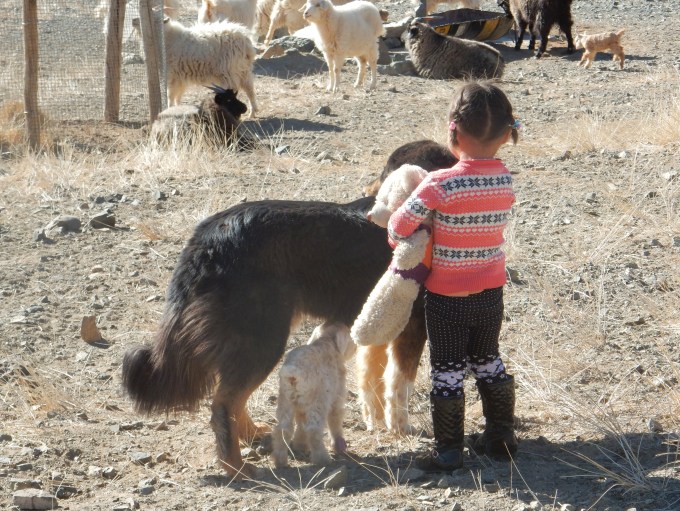
The Mongolian Bankhar Dog Project researches, breeds, and trains Mongolian Bankhar livestock protection dogs and places these working dogs in homes of nomadic herding families on the Mongolian steppe, where the Bankhar perform their traditional role of protecting livestock herds ...
Read
Add this initiative to my favorites
Remove this initiative to my favorites

When breeders have to deal with depredation of Jaguar or Puma upon their livestock, they have the opportunity to become a "pilot farm" and thus freely set up a non-lethal measure. Both the project leader and the breeder choose together which measure seem to be relevant and adapte...
Read
Add this initiative to my favorites
Remove this initiative to my favorites
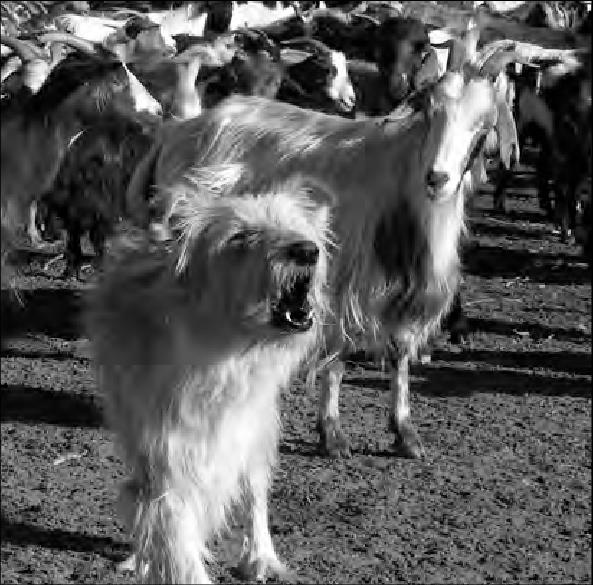
In this study, they "evaluated the use of local, medium-sized, mixed-breed guarding dogs to reduce predation and retaliatory killing of carnivores. They interviewed 64 herders, and delivered 37 puppies to 25 herders. Most economic loss was attributed to cougars (Puma concolor) an...
Read
Add this initiative to my favorites
Remove this initiative to my favorites

The bee fence is a simple barrier along which are arranged at regular intervals (10 m), hives suspended on a cable. Its operation is based on the observation that elephants would not approach within four meters of a hive (King et al., 2009). Despite the thickness of their skin, t...
Read
Add this initiative to my favorites
Remove this initiative to my favorites

Add this initiative to my favorites
Remove this initiative to my favorites

To support pastoralists and shepherds and give them the keys to successfully introduce a livestock guarding dog into their herd and its use on a daily basis, a national technical network on dogs has been set up.
Its objective is to disseminate knowledge and know-how in the...
Add this initiative to my favorites
Remove this initiative to my favorites

The Association VIE carries the applied research project entitled "The Patou does not do all" on the links that exist between social and spatial behaviors of livestock guarding dogs. The purpose of this participatory study is, among other things, to highlight elements that may he...
ReadAddressing Human – Wildlife interaction issues often requires a combination of diverse initiatives. While many of these already exist, they are spread out across the globe in such a way that many remain unknown and not available to all.
The ENCOSH platform has been co-created by an international, interdisciplinary team to foster and help practitioners worldwide to share their knowledge and experiences
Please do not hesitate to contact us for further information and guidance or share any suggestions to make this new platform the most suitable to your needs and expectations: https://encosh.org/contact/
Please, take into account that is an automatic translation made by a computer; the translation may not be always very accurate. If this translation is not clear enough in your native language, please let us know here: https://encosh.org/en/contact/. Donations will help paying professional translators for including qualitative translations instead