What is Encosh ?
A platform for exchange to support stakeholders involved in human-wildlife coexistence challenges.
A collaborative tool built by an interdisciplinary team.
An international network of diverse local actors.
A project to strengthen your capacity for action.
initiatives
Coping with human-wildlife interactions (e.g food protection, human safety and well-being; wildlife preservation) is a complex and urgent issue. It requires to combine and adapt locally diverse and complementary initiatives. Examples of toolbox and a search system are available below to help you creating your own toolbox to better tackle human-wildlife conflict and coexistence issues locally. It is important to note that some initiatives are very specific to a wildlife species and a context while others can be widely adapted.




 Filter search



Add this initiative to my favorites
Remove this initiative to my favorites

The Kangal or Anatolian Shepherd is a breed of dog of Turkish origin. It has been used for thousands of years as a guard dog during the transhumance of cattle. It is a muscular, powerful race, with a large head and a robust body. The male measures between 80 and 100 cm at the wit...
Read
Add this initiative to my favorites
Remove this initiative to my favorites

Peppi and Marko Laine are sheep farmers from Salo, Finland. Over the past years the sightings of wolves has increased from only a few to almost a hundred. Last year two of their lambs were killed by wolves. Now they are testing if llamas would be suitable guardians for their shee...
Read
Add this initiative to my favorites
Remove this initiative to my favorites

To support pastoralists and shepherds and give them the keys to successfully introduce a livestock guarding dog into their herd and its use on a daily basis, a national technical network on dogs has been set up.
Its objective is to disseminate knowledge and know-how in the...
Add this initiative to my favorites
Remove this initiative to my favorites

The Livestock Guarding Dog Program (LGD Program) was initiated in 1996, in the scope of the wolf conservation strategy established by Grupo Lobo, and has been running since. Its main goal is to promote the recovery of autochthonous breeds of livestock guarding dogs as an effectiv...
Read
Add this initiative to my favorites
Remove this initiative to my favorites

Enclosure made with few stakes and nets (the same ones used for livestock), a wooden pallet to make the entrance of the enclosure, and garbage cans and ropes that respectively serve as self-feeding food reserve for livestock guarding dogs. An initiative to reduce the time spent b...
Read
Add this initiative to my favorites
Remove this initiative to my favorites

The Association VIE carries the applied research project entitled "The Patou does not do all" on the links that exist between social and spatial behaviors of livestock guarding dogs. The purpose of this participatory study is, among other things, to highlight elements that may he...
Read
Add this initiative to my favorites
Remove this initiative to my favorites

The ultimate objective of this program is to improve the "quality" of livestock guarding dogs (selection, education, behavior), to identify the parameters and situations that influence their effectiveness in protection (pastoral practices, equipment, use of space …) and thus he...
Read
Add this initiative to my favorites
Remove this initiative to my favorites

When breeders have to deal with depredation of Jaguar or Puma upon their livestock, they have the opportunity to become a "pilot farm" and thus freely set up a non-lethal measure. Both the project leader and the breeder choose together which measure seem to be relevant and adapte...
Read
Add this initiative to my favorites
Remove this initiative to my favorites

When a rural landowner participating in NJP and Naturalia’s joint Viviendo con Felinos project produces a photograph of a jaguar on his ranch, he’ll be paid a cash value equal to the long-standing bounty offered locally for dead jaguars. And since that same jaguar – kept al...
Read
Add this initiative to my favorites
Remove this initiative to my favorites

Add this initiative to my favorites
Remove this initiative to my favorites

Working as a shepherd in the Pyrenees is a challenge since bears are around. Yannick Lamazou produces cheese up in the mountains in the National Park and found a good way of promoting bears and sheep at the same time.
Yannick Lamazou is the son of a shepherd who has ...
Add this initiative to my favorites
Remove this initiative to my favorites

Insurance to offset other costs related to depredation (such as abortions, loss of milk production and subsidies per livestock head)
Read
Add this initiative to my favorites
Remove this initiative to my favorites

An insurance scheme has been created through partners (EU) support and also with the villagers subscribing to the insurance with 2500FCFA/per hectare/year (4$/hectare/year) to insured their fields. Then during the devastation, the policyholders notify the park managers in order t...
Read
Add this initiative to my favorites
Remove this initiative to my favorites

From my lion work in the past, 90% of cattle killed by lions are killed when grazing without a herder. When I was a child in Zimbabwe, I never saw a herd of cattle alone without a herder. Therefore, something has changed.
When we ask what has changed, the answer is that t...
Add this initiative to my favorites
Remove this initiative to my favorites

To facilitate the long-term sustainability of this measure, Greek eNGOs initiated an extensive consultation and negotiation processes with national competent authorities, mainly the Ministry of Rural Development and Food so that financial support for the measure would be included...
Read
Add this initiative to my favorites
Remove this initiative to my favorites

We aim to adopt craftsmanship as a creative tool and a livelihood initiative, enabling the Andean Cat Alliance (Alianza Gato Andino – AGA) to support wildlife conservation – particularly of the Andean cat – through increased engagement of local people while simultaneously r...
Read
Add this initiative to my favorites
Remove this initiative to my favorites

Program to foster donation in order to support people in rural areas who shoulder the real cost of co-existing with wolves, brown bears and lynx with prompt and practical assistance to resolve conflicts.
Read
Add this initiative to my favorites
Remove this initiative to my favorites

With the objective of alleviating this situation, The Corbett Foundation (TCF), a conservation NGO working in India, launched the Cattle Compensation Scheme in 1995 to give interim and on-the-spot financial assistance to villagers, whose cattle have been killed by a tiger or a le...
Read
Add this initiative to my favorites
Remove this initiative to my favorites
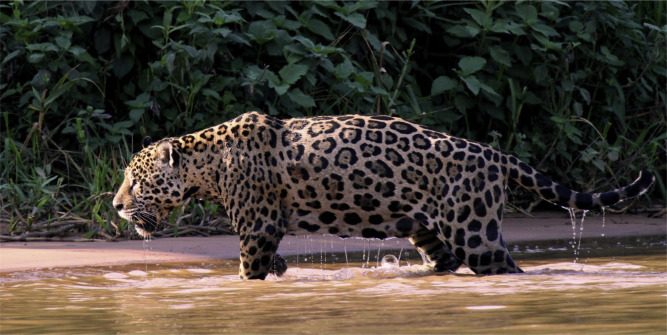
Cattle losses induced by jaguars could be compensated by a system of voluntary donations from tourists
Read
Add this initiative to my favorites
Remove this initiative to my favorites
Both the Marsican brown bear (Ursus arctos marsicanus) and the Italian honey bee (Apis mellifera ligustica) are threatened by the alteration of ecosystems caused by humans. If the bear is critically endangered and on the verge of extinction, then the bees are not safe either. The...
Read
Add this initiative to my favorites
Remove this initiative to my favorites

A participatory nation-wide think-tank (Campo Grande Group) where people linked to several sectors related to the conflict are participating. The goal is to gather some agreements and negotiated propositions to address conflict and de-escalate the tension generated by this proble...
Read
Add this initiative to my favorites
Remove this initiative to my favorites

Wildlife Friendly™ certification is a global program providing best practice guidelines for farming, ranching, and other enterprises who seek to generate sustainable livelihoods while protecting key species of biodiversity. Our certification programs, also including species-fo...
Read
Add this initiative to my favorites
Remove this initiative to my favorites
The scheme provides cash relief of 1 million NRs (1 USD equivalent to NRs 115 in 2019) in case of human deaths to victim family. The cash relief also compensates for crop damages, property loss and livestock loss. The scheme includes 14 wildlife species namely Bear, Tiger, Rhino,...
Read
Add this initiative to my favorites
Remove this initiative to my favorites

The Village Tiger Response Team (VTRT) is a community driven mechanism. Their main roles are to manage the Human - Tiger interactions issues inside village and to provide data on a regular basis to manage the WildTeam’s Human-Tiger Conflict (HTC) database. But over the time the...
Read
Add this initiative to my favorites
Remove this initiative to my favorites
Ex-post compensation covering up to 100% of the market value of livestock depredated by wolves and up to 60% of the value of livestock depredated by dogs.
In this study, they "conclude
that compensation may fail to improve tolerance toward carnivores unless it...
Add this initiative to my favorites
Remove this initiative to my favorites

16 years ago Pedro and Ana decided to move to Castro Laboreiro where many of the wolves in Portugal live. They never regretted this move - today they have an ecotourism company and offer visitors a unique experience by riding horses through the ‘land of the wolves’.
Add this initiative to my favorites
Remove this initiative to my favorites

Human - Tiger conflict is one of the most critical issues in tiger conservation and also a serious problem for human safety (attacks on humans and livestock. It thus requires a focus on effective mitigation measures. Two of these measures used in Nepal have been assessed: compens...
Read
How to contribute ?
Sign up and create your account.
Click on “Add an initiative” and fill out the form.
Submit your form and wait for our validation.
Share your initiative with our network and discuss it with different stakeholders.
Why join us ?
Are you a farmer, researcher, or an NGO? Join us!
Enjoy quick and easy access to all the initiatives on the platform, and download or print technical sheets to facilitate your work.
Comment on initiatives and ask your questions directly to project leaders to engage and get answers tailored to your needs.
Create and customize your own “toolbox” by selecting different initiatives to better manage human-wildlife interactions at the local level.
Engage and collaborate with the international community through a dedicated forum, share your initiatives, and benefit from the experience and feedback of other members.
Addressing Human – Wildlife interaction issues often requires a combination of diverse initiatives. While many of these already exist, they are spread out across the globe in such a way that many remain unknown and not available to all.
The ENCOSH platform has been co-created by an international, interdisciplinary team to foster and help practitioners worldwide to share their knowledge and experiences
Please do not hesitate to contact us for further information and guidance or share any suggestions to make this new platform the most suitable to your needs and expectations: https://encosh.org/contact/
Please, take into account that is an automatic translation made by a computer; the translation may not be always very accurate. If this translation is not clear enough in your native language, please let us know here: https://encosh.org/en/contact/. Donations will help paying professional translators for including qualitative translations instead