


Add this initiative to my favorites
Remove this initiative to my favorites

HWC toolkit was developed to help communities adjacent to protected area. The toolkit contained a combination of Torch, Horn, Fire cracker and Roman candle. The toolkit is used sequentially. More than 1200 individual were trained within Tarangire - manyara ecosystem and Kilimanja...
Read
Add this initiative to my favorites
Remove this initiative to my favorites

Honeyguide HEC Prevention Methodology
Working with community youth volunteers and wildlife scouts, Honeyguide developed a Human-Elephant Conflict (HEC) Toolkit that uses a sequential order of methods to prevent crop destruction. The objective of the HEC Toolkit is to...
Add this initiative to my favorites
Remove this initiative to my favorites

We aim to test two new non-lethal methods to prevent sheep predation by wolves.
One method consists in a lightweight cover made of fabric stripes impregnated with a concentrated chili pepper extract and hanging around the sheep: a "defence harness". The harness should not ...
Add this initiative to my favorites
Remove this initiative to my favorites
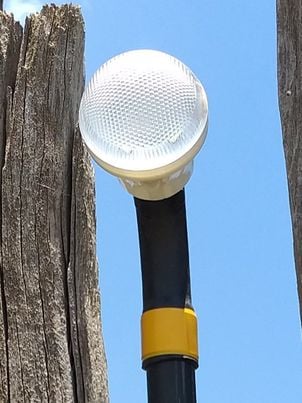
To discourage predator attacks at night, flashing predator deterrent light systems are mounted on livestock enclosures. This idea is intended to fool predators into thinking there is someone walking around with a torch during the night, and it is too dangerous to target livestock...
Read
Add this initiative to my favorites
Remove this initiative to my favorites

The first attractant of elephants to our fields is the different crops grown within, such as maize, sorghum, millet etc. Therefore, this trials hold a strong position that evaluating alternative cropping strategies can bring about a significant knowledge, understanding and more i...
Read
Add this initiative to my favorites
Remove this initiative to my favorites

The inhabitants use rags that were used to clean the guns and which are imbued with the smell of gun powder. These rags are arranged on a fan, or else attached to the tail of the horses. According to them, wolves make the association between gun powder and shooting and therefore ...
Read
Add this initiative to my favorites
Remove this initiative to my favorites

Initially developed to protect poultry from foxes, the use of flashing lights was then extended to various predators: in Nepal to limit depredation of snow leopard over livestock, in Africa against cheetah attacks or in France against wolves.
The device emits flashe...
Add this initiative to my favorites
Remove this initiative to my favorites

Elephants break water tanks, and pipes, and sometimes houses to access water. The main aim is to protect the water storage facilities in rural villages , as the loss of water in a semi-arid desert puts many human lives at risk.
The government provides each village ...
Add this initiative to my favorites
Remove this initiative to my favorites
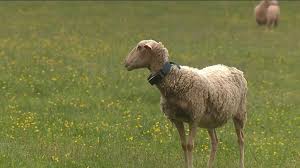
Project initiated in 2011, in the cantons of Vaud and Valais (Switzerland).
It is broken down into two parts:
- The design of the attack detection system;
- The composition of the repellent; alarm pheromones, the choice of the discriminating stimulus.
Add this initiative to my favorites
Remove this initiative to my favorites

When breeders have to deal with depredation of Jaguar or Puma upon their livestock, they have the opportunity to become a "pilot farm" and thus freely set up a non-lethal measure. Both the project leader and the breeder choose together which measure seem to be relevant and adapte...
ReadAddressing Human – Wildlife interaction issues often requires a combination of diverse initiatives. While many of these already exist, they are spread out across the globe in such a way that many remain unknown and not available to all.
The ENCOSH platform has been co-created by an international, interdisciplinary team to foster and help practitioners worldwide to share their knowledge and experiences
Please do not hesitate to contact us for further information and guidance or share any suggestions to make this new platform the most suitable to your needs and expectations: https://encosh.org/contact/
Please, take into account that is an automatic translation made by a computer; the translation may not be always very accurate. If this translation is not clear enough in your native language, please let us know here: https://encosh.org/en/contact/. Donations will help paying professional translators for including qualitative translations instead